For small websites with low traffic, shared hosting is typically the best and most cheap option. But there are frequently plainly visible indicators that you should upgrade to a more advanced hosting solution. In this article, we’ll look at them and explain why VPS hosting is the best choice going forward.
When should you upgrade from shared hosting to a VPS? Upgrade when your site regularly slows down or hits resource limits at busy times, when you need software or server settings that shared hosting will not allow, when an online shop needs steadier performance, or when you want an isolated environment for security. If none of these apply, shared hosting is usually cheaper and simpler.
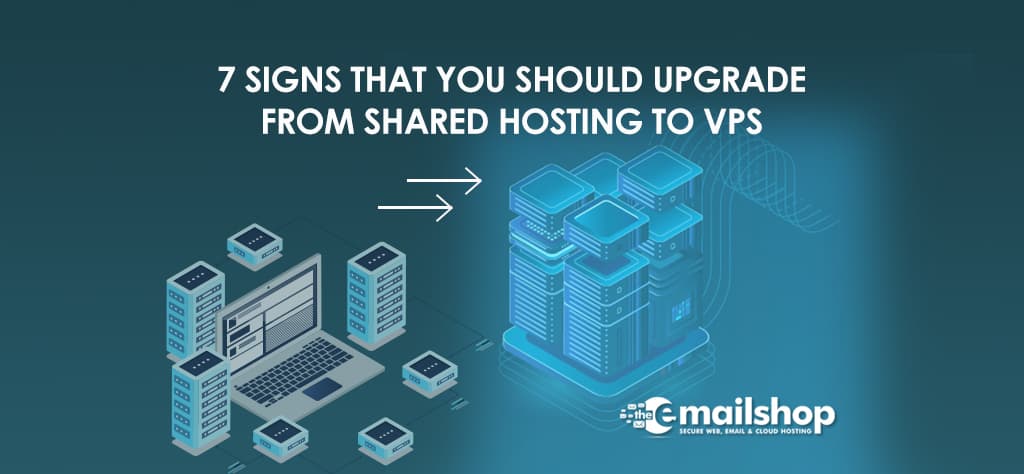
7 Signs that You Should Upgrade from Shared Hosting to VPS
Choosing a hosting plan that can meet your needs is essential whether you manage a website or an online store. Shared hosting is a popular option for beginners because it is affordable and straightforward to set up. However, when your website grows and you start to encounter more traffic and demand, shared hosting might not be sufficient to meet your needs. Seven signs that it’s time to migrate from shared to VPS (virtual private server) hosting are listed below.
-
Increased Traffic to your Website
Shared hosting might not be able to handle the volume of traffic if your website is seeing a noticeable rise in visitors. Better performance and greater traffic volumes can be handled by a VPS without sluggishness or crashes. Your website may stay quick and responsive even during moments of high traffic by upgrading to a VPS.
-
Performance Issues
Shared hosting can be to blame if you frequently experience outages, have trouble loading pages, or have other performance concerns. A VPS can provide improved performance and quicker page loads. Your website won’t be impacted by other websites on the same server because you have dedicated resources with a VPS.
-
Limited Resources
Shared hosting plans may have constrained memory, bandwidth, and disc space. Upgrading to a VPS can give you greater flexibility and resources if you discover that you are constantly reaching your limits or running out of resources. By scaling up your resources as necessary using a VPS, you can be sure that your website can accommodate any expansion.
-
Security Concerns
Given that you share server resources with other websites, shared hosting may not be as safe. Upgrading to a VPS might provide better protection and control if your website contains sensitive information or you are concerned about security. You can implement your own security measures and have your own dedicated resources with a VPS.
-
Customization Needs
Upgrading to a VPS might provide you the freedom to modify your environment as necessary if you need specialized software or configurations that are not offered by shared hosting plans. With a VPS, you have complete root access, allowing you to install and set up any necessary software.
-
E-commerce Requirements
A VPS can offer the security and performance required to carry out transactions online while also ensuring the protection of client data if you have an online store or wish to sell things on your website. With VPS client information, you may utilize security tools like firewalls and SSL certificates to safeguard your data.
-
Control and Flexibility
A VPS might give you more customization options and control than shared hosting if you need more control over your hosting environment or need the freedom to install and configure your own software. You have complete control over your environment and can make any necessary modifications with a VPS.
You May Also Like To Read: Cloud Hosting vs VPS: Which One Is The Best In 2023?
Frequently asked questions
What is the difference between shared hosting and a VPS?
Shared hosting puts many customers' sites on one server with shared resources. A VPS is your own virtual server: the vCPU, RAM and storage on your plan are allocated to you alone, and you get full root access.
How much more does a VPS cost than shared hosting?
At The Email Shop shared web hosting starts from £4.19 a month on annual billing, and VPS hosting from £10.79 a month on annual billing, then £17.99 a month.
Do I need technical skills to run a VPS?
Our VPS is unmanaged, so you administer the operating system and software yourself, with UK-based support one ticket away. If you would rather not manage a server, stay on shared hosting until you need to move.
Will moving to a VPS cause downtime?
It does not have to. Build and test the new server first, lower your DNS TTL a day beforehand, then switch the records. Visitors move across as DNS updates, while the old hosting keeps serving until it does.
Should I choose a VPS or a Cloud VPS?
Choose a plain VPS if a short outage while failed hardware is replaced is acceptable and you keep your own backups. Choose a Cloud VPS if you want it to restart automatically on another host and a 99.9% monthly uptime commitment.
Closing Thoughts
Finally, if you see any of the aforementioned symptoms, it could be time to switch from shared hosting to VPS. Better performance, more resources, more security, and flexibility provided by a VPS may guarantee that your website can accommodate any expansion and fulfill your needs. For shared hosting websites in need of a more sophisticated hosting solution, VPS is the go-to option because it provides all the power and speed of a tiny dedicated server for a fraction of the cost. After reading the aforementioned points, you should have a better idea of when it would be advantageous for you to move to VPS hosting and what those advantages would be.
If you want to upgrade your website to a VPS, you can get in touch with our team. We genuinely hope that this information was helpful to you. Contact the email shop team by submitting your questions here.
For Discount and Offers, Visit our Official Twitter Page